
CBT THERAPIST
AUTHOR
OCD SPECIALIST
5 OCD Myths that keep you stuck
Subscribe below to receive your free guide and start challenging common OCD myths.
Thanks for Subscribing
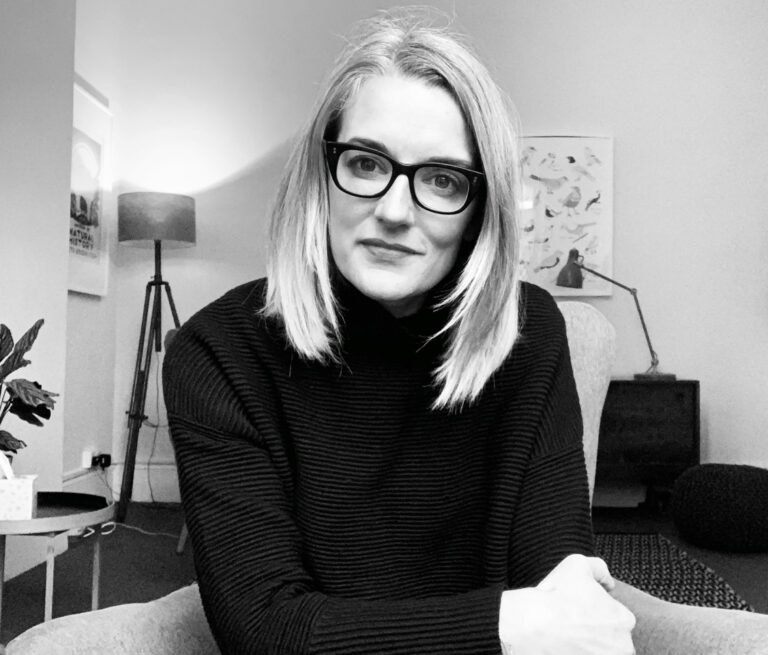
ABOUT ME
More recently, I have developed an online self-directed program designed to help people take back control by creating a new relationship with their unwanted thoughts, images, sensations, feelings and urges. Check out Work with Katie or Self-Help pages for details of different options.
Throughout my career, I have been committed to sharing knowledge and raising awareness about OCD. I have had the privilege of presenting at various conferences and seminars, collaborating with charities, and appearing on television and podcasts. These opportunities allowed me to engage with diverse audiences and contribute to important conversations surrounding OCD and mental health. By actively participating in these platforms, I aim to provide valuable insights and foster greater understanding and support for individuals affected by OCD.
As featured on ...



Questions regarding sessions?
FAQs
DOES KATIE HAVE OCD?
People sometimes ask if I’ve personally experienced OCD, and the answer is no. My journey to focusing on OCD began during my very first placement as a trainee, where I had the opportunity to work with a client with OCD. Quickly immersing myself in understanding and treating OCD was essential, and witnessing the positive impact the process had on my client was incredibly rewarding. This experience ignited my passion, leading me to work with more clients facing similar challenges.
While having personal experience with OCD isn’t part of my background, it’s important to remember that a therapist, much like an oncologist who hasn’t had cancer, can still excel in their field. A benefit of my perspective is a deep understanding of the treatment process, which often involves embracing uncertainty—something OCD is not keen on and I am now very experienced at navigating.
WHAT QUALIFIES KATIE TO WORK WITH OCD?
I have a master’s degree in Rational Emotive and Cognitive Behavioral Therapy (RECBT) from Goldsmiths College, University of London. My commitment to understanding OCD began early and I chose this as the dissertation subject for my Masters. Subsequently, I joined The Priory Hospital in North London, where I delivered group therapy for OCD and other anxiety disorders.
As I helped individuals reclaim their lives, my passion for this work only deepened, alongside my understanding and skill set. I’ve had the privilege of attending and presenting at numerous conferences and co-authored the book Managing OCD with CBT for Dummies with my colleague, Rob Willson.
While understanding the theory behind OCD is important, the essence of effective therapy lies in the practical application. OCD is dynamic and often seeks to confuse and challenge us at every turn. With over twenty years of experience working with individuals facing OCD, I like to say that I’m “fluent in OCD.” This expertise enables me to anticipate its challenges and symptoms, allowing for a more effective therapeutic approach.
I'VE HAD CBT BEFORE AND IT DIDN'T WORK. HOW IS THIS DIFFERENT?
I have worked with many people who have had CBT before, in fact it’s very often the case.
It is important to understand that specialised CBT for OCD is different from standard CBT in a number of important ways.
- Standard CBT focusses on examining and altering your thoughts, a process that will at best provide a temporary fix for OCD, but engaging in questioning and reasoning with the thoughts and feelings ultimately makes the problem worse.
- CBT for OCD focuses on addressing the way that unwanted thoughts and images are being processed and responded to and uses specific techniques such as ERP & MCT to create change.
- Specialised CBT for OCD targets the core elements of OCD and helps you rewire your brain for lasting change. So just because you’ve had CBT it doesn’t necessarily mean you’ve had the right treatment for OCD.
I'VE TRIED ERP BEFORE AND IT DIDN'T WORK. IS THIS STILL FOR ME?
When performed correctly, ERP is the single most powerful weapon we have against OCD.
Unfortunately, there is a lot of misinformation and misunderstanding about how to do ERP and often people may have been encouraged to expose themselves to triggers and to simply try and resist performing their compulsions.
This misses vital elements to the process and is not very different to what people try on their own – after all, if you could simply resist performing your compulsions you would not be in this position!
So if you have tried ERP before don’t assume that it doesn’t work for you – I am yet to meet someone who hasn’t benefitted from ERP when they have committed to doing it correctly and consistently.
CAN OCD BE CURED OR DO I JUST HAVE TO LEARN TO MANAGE IT?
The myth that OCD is a chronic problem that you “just have to manage” is one that I find most frustrating!
Firstly, it is an out-dated idea that is simply not true! Moreover, when we are told something cannot be cured, it is demoralising and disempowering.
The key lies in understanding what “cured” means in the context of OCD. If by cured, you mean never experiencing another unwanted thought, image, feeling, sensation or urge again, then yes, it’s true—OCD can’t be “cured” in that way – it would be impossible given that unwanted thoughts are a common experience of being human!
However, the concept of “managing” OCD implies suffering through it or simply making it less distressing.
Instead, effective management involves approaching and responding to OCD in a way that allows it to lose its power.
By working on the maintaining behaviours and beliefs, these unwanted mental or physical events cease to be problematic or detrimental —essentially transforming it into a non-issue in your life.
In this sense, if OCD is no longer a problem for you, then it’s fair to say you’ve ‘cured’ the problem.
HOW LONG DOES IT TAKE TO GET BETTER?
Unfortunately this is a bit like asking “how long is a piece of string?”.
It depends on a number of factors, but in my experience the most important are your motivation and your willingness to put in the time and effort to stay committed, even when things feel very hard.
It is worth bearing in mind that the point of treatment is to help you become our own therapist so that you can learn to deal with OCD differently and get yourself to a point where it is no longer a big issue in your life.
This means you do not need to be in treatment until your OCD has gone away completely, but just until you have all the tools you need and can put them into practice effectively.

Videos
Join over 5.7 million viewers accessing free practical tips and guided exercises to help manage OCD on my
YouTube channel.
Visit my channel
Featured Video
"It's Just OCD"
43. OCD Treatment: Understanding Why Saying “It’s Just OCD” Doesn’t Work. Telling yourself “It’s just OCD” might sound like a helpful mantra — but in this video, cognitive behavioural therapist Katie d’Ath explains why this approach can actually make things worse.